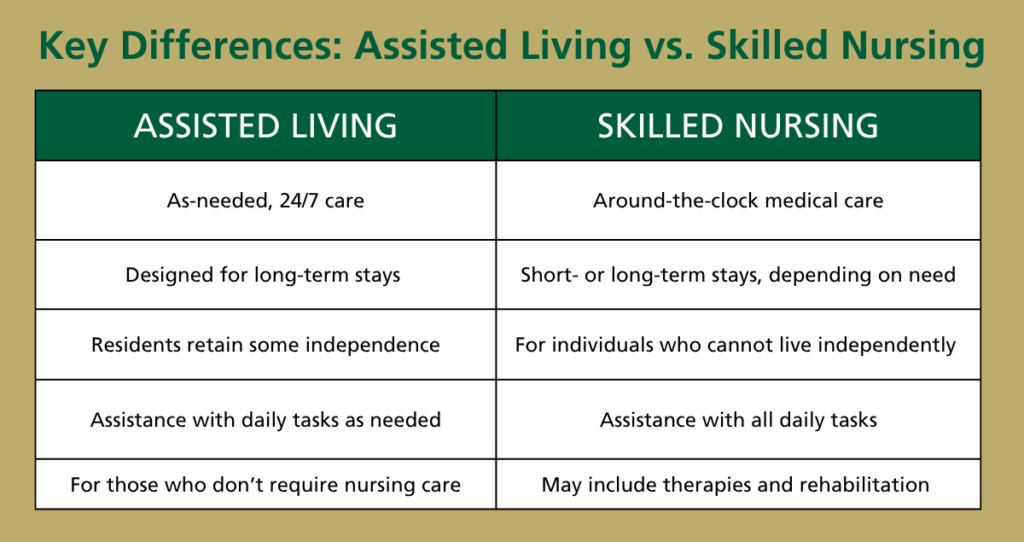
When it comes to your loved ones, choosing the right care matters. Determining the level of care a loved one needs is one of the most personal and emotional decisions a family can make. When comparing assisted living vs. skilled nursing, knowledge and understanding of both are essential. Each provides medical support to older adults, but the key difference lies in the level and frequency of care provided.
If you’re unsure which type of care might fit your loved one’s needs, this guide on assisted living vs. skilled nursing care can help you make an informed decision.
According to the CDC, approximately 1 million residents live in assisted living facilities. An assisted living facility is a residential setting designed for adults who need support while maintaining a level of independence. Residents might need daily assistance with tasks such as:
This level of care is for those who do not need nursing care but still need assistance with daily activities. Residents can enjoy their independence with the peace of mind that staff are available at all times. Assisted living is a long-term option for residents who plan to live there permanently rather than for those who need temporary care. Most assisted living communities offer private or semi-private apartments, daily meals, transportation and social activities such as games, exercise classes or outings.
Who qualifies for an assisted living facility? Each state sets its own assisted living guidelines that an older adult must meet before qualifying for this type of care. A physician must also approve the individual case. In addition, many assisted living communities have a minimum age requirement.
Skilled nursing can involve an extended or short-term stay in which a patient receives around-the-clock care for medical needs. This level of care is appropriate for those who can’t live independently. While receiving this care, each patient receives a specialized treatment plan developed by a physician or nurse.
Skilled nursing facilities are staffed with registered nurses, therapists and other licensed medical professionals who monitor patients 24 hours a day. Rooms are typically more clinical in setup than assisted living apartments, with closer medical supervision and access to therapy spaces on-site.
Unlike assisted living, time spent in skilled nursing may vary. An older adult may need a short-term rehabilitative stay after an injury or long-term nursing care with memory support services. It is highly personalized to the individual patient’s needs. Skilled nursing may also include additional, specialized medical care, such as:
Beyond medical needs, it’s important to think about your loved one’s lifestyle, personality and long-term goals. Some people thrive in a social, residential environment where they can maintain independence while enjoying meals, community events and new friendships. Others may feel more comfortable in a setting with structured routines and constant medical supervision.
When visiting potential communities, take time to observe the atmosphere and ask questions.
Comparing a few options side by side often provides clarity and peace of mind. Choosing the right fit is about finding a place where your loved one feels safe, valued and connected.
Deciding on the proper form of care for a loved one can be difficult and depends on their specific needs. The correct treatment plan is not necessarily linear, or exclusively one or the other. Often, a loved one may start in one form of care before needing to transition to another.
Approximately 60% of residents transition to skilled nursing facilities for higher care needs. For example, an individual could spend many years living more independently in assisted living before eventually transitioning to skilled nursing care due to something like advanced dementia. Alternatively, an older adult may spend a short-term stay in skilled nursing care after a fall, stroke or surgery and then transition to assisted living once they have been rehabilitated.
The first and most important step is talking to your loved one’s doctor about which form of care is the right fit. In addition, take time to find the right medical care provider, skilled nursing provider or assisted living facility for your loved one. Facilities and providers are not all one-size-fits-all, and you want to find a care setting where your loved one will not just live but thrive.
A: The most significant difference is in the level of care. Assisted living offers help with daily activities and light supervision, while skilled nursing provides 24-hour medical care from licensed nurses and therapists.
A: It depends on their health and independence. If they can manage most daily tasks but need occasional help, assisted living may be the best option. If they require ongoing medical care or rehabilitation after an illness or injury, skilled nursing is likely the right choice.
A: Not exactly. While both provide around-the-clock care, skilled nursing facilities focus more on medical treatment and rehabilitation. Traditional nursing homes usually provide long-term custodial care.
A: Most long-term care insurance policies and Medicare/Medicaid programs have specific guidelines. It’s best to confirm coverage with your provider before choosing a facility.
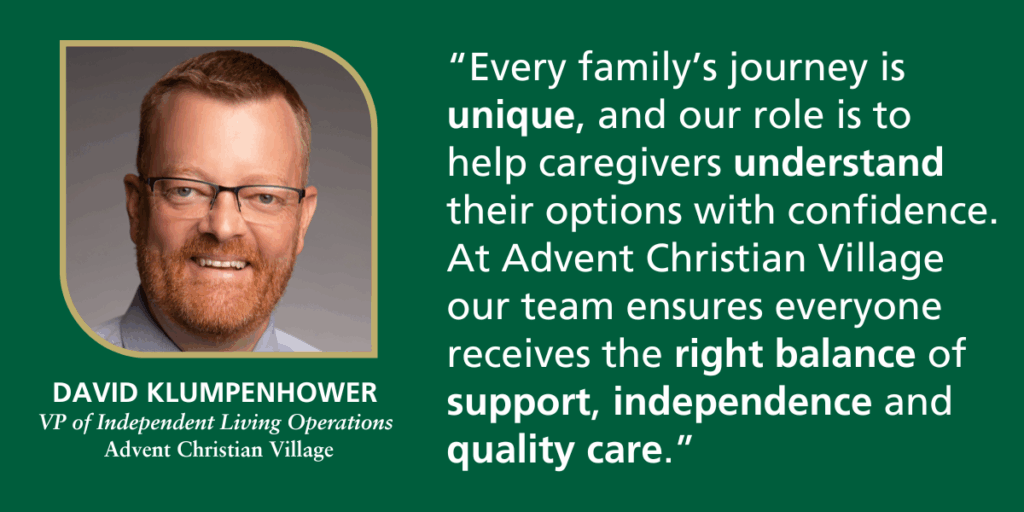
A: Yes. Many senior living communities, including communities offering comprehensive care like Advent Christian Village, make transitions smooth by offering multiple levels of care on the same campus, so residents can move seamlessly as their needs evolve.
Whether in need of in-home assistance, an assisted living option or 24-hour skilled nursing care, your loved one will be well cared for at Advent Christian Village. We’ve designed our senior living community medical services to ensure each member’s well-being, optimal health and independence. Our continuing care community offers a variety of senior living medical services on one convenient campus. We’re also equipped to provide the support each resident needs when transitioning from one level of care to another. Call (386) 658-3333 or contact us online today to schedule a tour.
10680 Dowling Park Dr. Live Oak, FL 32060
© 2025 Advent Christian Village | All Rights Reserved