
Driving is an important part of many older adults’ independence, but age-related changes in vision, reaction time and cognition can affect road safety. Families often find it difficult to know when to raise concerns or how to start a conversation about senior driving. Despite this, paying attention to real changes and warning signs can help protect both safety and dignity for aging loved ones. This article offers practical guidance on understanding how aging affects driving ability, recognizing when it may be time to evaluate driving skills and navigating that transition with care and compassion.
As adults age, natural changes in vision, hearing, reaction time and flexibility can affect driving ability. Glare from headlights may feel stronger at night, road signs may be harder to read and turning to check blind spots may require more effort. Reaction time often slows, making it more difficult to respond to sudden stops or changing traffic conditions.
In addition, certain health conditions and medications may influence safe driving. Arthritis can limit mobility, diabetes or heart conditions may affect stamina and some prescriptions can cause drowsiness or blurred vision. These changes do not automatically mean someone should stop driving, but being aware of how aging affects the body and mind can help families recognize when it may be time for a closer evaluation.
According to the National Highway Traffic Safety Administration, drivers age 65 and older were involved in 7,810 fatal crashes in 2023, accounting for 19 percent of all fatal crashes nationwide. As the number of older drivers continues to grow, understanding how aging can influence driving safety becomes increasingly important.
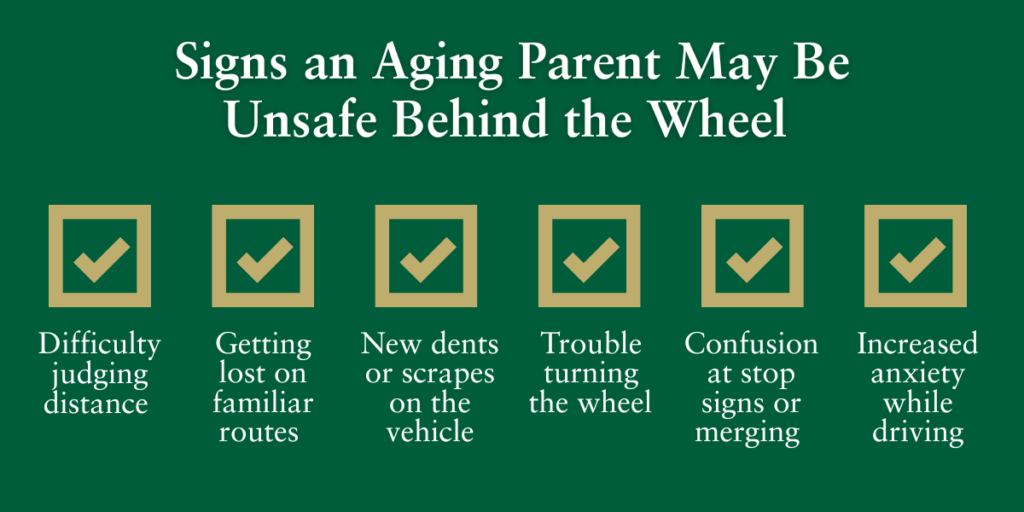
Sometimes the first signs of unsafe driving are subtle. A parent may begin to get lost on familiar routes, hesitate at busy intersections or misjudge distance when parking or merging. Occasional mistakes happen to everyone, but repeated confusion or delayed decision-making may indicate that driving has become more challenging.
Families may also notice physical changes that affect driving ability. Difficulty turning the steering wheel, checking blind spots or responding quickly to traffic signals can increase risk. In addition, minor driving incidents such as unexplained dents, close calls or traffic warnings may signal that a closer look is needed.
Emotional changes can also offer important clues. Increased anxiety behind the wheel, reluctance to drive at night or uncertainty in heavy traffic may suggest a loss of confidence. Paying attention to patterns rather than isolated events can help families determine whether it is time to evaluate driving more carefully.
If concerns arise, there are practical ways to assess driving ability without immediately taking away independence. A professional driving evaluation can provide an objective assessment of skills and reaction time. Physicians can also review medical conditions and medications to determine whether they may be affecting alertness or mobility.
Families may choose to observe patterns over time using simple checklists or shared conversations about recent driving experiences. In some cases, small adjustments such as limiting driving to familiar routes, avoiding night driving or practicing with supervision can help maintain safety while preserving confidence. Senior drivers aged 55+ can also take state-approved online courses to improve their safe driving know-how and earn a mandatory auto insurance discount.
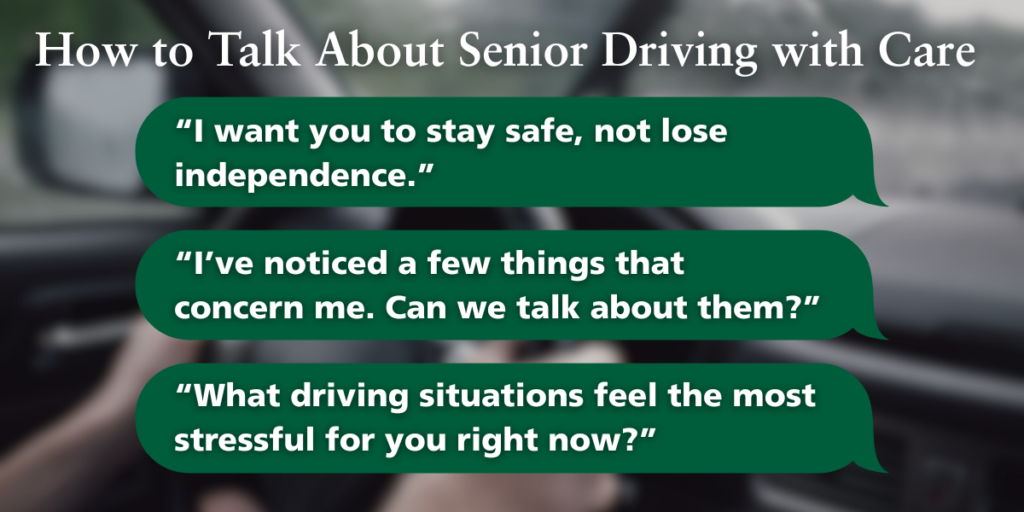
Bringing up concerns about senior driving requires patience and respect. Choose a calm, private moment rather than raising the topic during or immediately after a stressful driving situation. Approach the conversation from a place of safety and support, focusing on your care for their well-being rather than pointing out mistakes.
Use clear, gentle language and share specific observations without sounding accusatory. Listening is just as important as speaking. Give your parent or loved one space to express their feelings, fears or frustrations, and involve them in any decisions about next steps. In some situations, it may be helpful to include a trusted physician, pastor or other family member who can offer guidance and reassurance.
If it becomes necessary to limit or stop driving, planning can make the transition easier. Exploring transportation options early helps reduce anxiety and reinforces that independence can continue in new ways. Family members, friends, church groups and community transportation programs can often provide reliable support for appointments, errands and social activities.
Many retirement communities also offer transportation services that make daily life more convenient and less stressful. Scheduled outings, group activities and on-site amenities reduce the need for frequent driving while helping older adults remain active and connected. With thoughtful planning and a supportive environment, stepping away from driving can open the door to greater safety, peace of mind and continued engagement in community life.
Navigating conversations about senior driving requires care, patience and thoughtful planning. With the right support system in place, families can prioritize safety while preserving dignity and connection. A community that offers transportation options, social engagement and accessible services can make this transition feel less overwhelming and more empowering.
At Advent Christian Village, independent living residents benefit from a supportive environment designed to promote safety and continued independence. With scheduled transportation, walkable areas and a vibrant calendar of activities, residents can remain active and connected without the stress of daily driving.
Advent Christian Village is a faith-based senior living community in beautiful Live Oak, Florida. We offer a full continuum of care that grows with our residents as their needs change, from homeownership in independent neighborhoods to compassionate assisted living and skilled nursing care.
Call (386) 658-3333 or contact us online today to schedule a tour and learn how our community can support you or your loved one through every stage of aging.
10680 Dowling Park Dr. Live Oak, FL 32060
© 2026 Advent Christian Village | All Rights Reserved